Meditation and mindfulness have become part of daily life for many people looking for more balance, clarity, and meaning. Over the years, distinct approaches have taken shape, each with their own structure and purpose. In our experience, two methods often spark curiosity: Marquesian meditation and traditional mindfulness practices. While both paths invite us to turn inward, the way they guide us—what they focus on and how they shape results—offers unique possibilities.
Understanding traditional mindfulness practices
When we think of traditional mindfulness, what often comes to mind is the act of paying full attention to what is happening in the present. The guiding principle can be summed up in one word: awareness. We find ourselves encouraged to observe our breath, sensations, thoughts, and emotions as they arise, without trying to change or judge them. The foundation here is non-reactive observation.
Traditional mindfulness invites us to witness our inner experiences as if we are sitting by the riverbank, simply watching the water flow by. We do not try to alter the stream; we let it pass. This attitude builds the ability to notice triggers and patterns in daily life, creating a buffer between stimulation and reaction. Over time, many report greater calm, sharper attention, and a sense of inner steadiness.
Typical methods in mindfulness
Several commonly used exercises form the backbone of mindfulness, for example:
- Breath awareness: Focusing gentle attention on the natural rhythm of the breath.
- Body scan: Moving awareness methodically through each part of the body, noticing sensations and tension.
- Open monitoring: Observing whatever arises in the mind—thoughts, images, emotions—without latching on or pushing away.
- Walking meditation: Paying attention to the sensation of each step, grounding awareness in movement.
We notice these methods share a common thread. They invite conscious presence and kindly curiosity in daily life, whether we are sitting in silence or moving through everyday tasks. The main goal is experiencing life directly, as it unfolds, without being carried away by mental habits or emotional storms.
How Marquesian meditation broadens the horizon
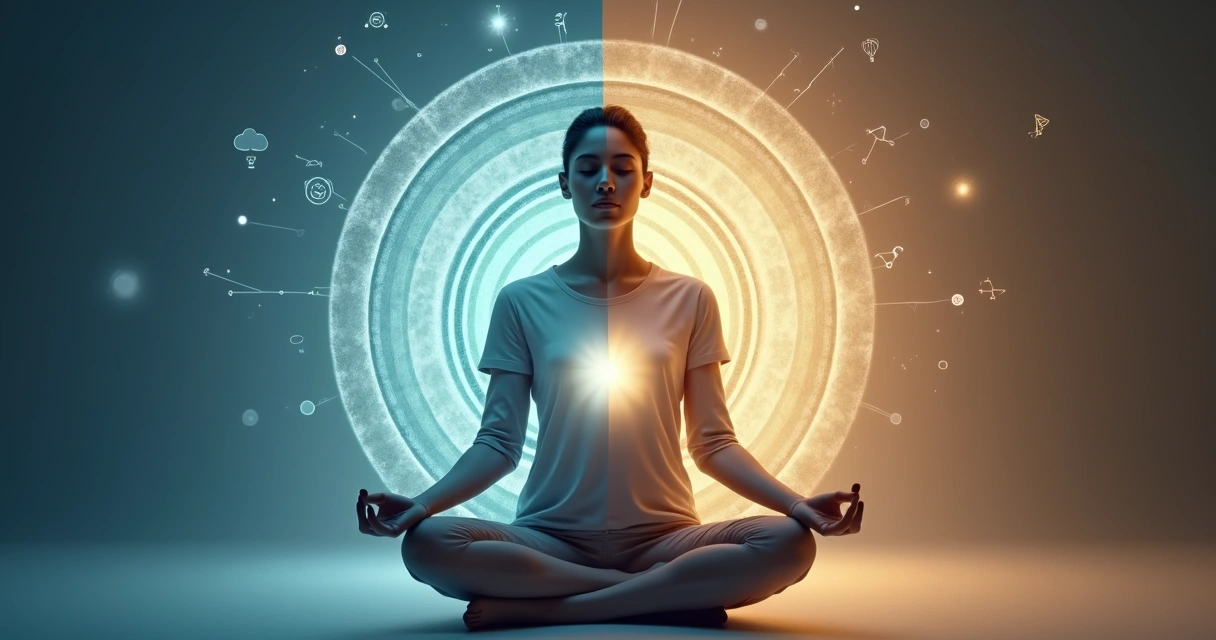
Marquesian meditation builds on some of the themes present in mindfulness, but takes a step further. In our work, we see it as a structured method that combines observation with intentional transformation. It approaches human experience as a dynamic field—mind, emotion, behavior, and consciousness are not separate, but interconnected. The purpose is not only to observe reality, but to reorganize and align it.
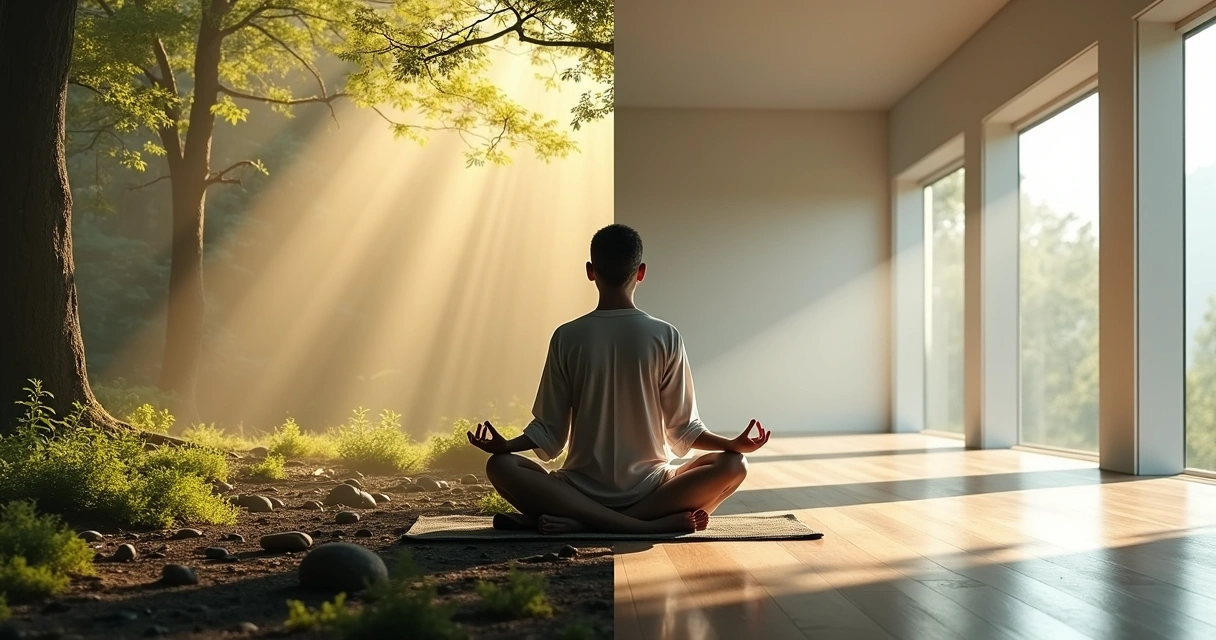
What stands out in Marquesian meditation is its integrative model, based on distinct pillars. These include philosophy, psychology, and specific contemplative techniques developed to lead practitioners not just to neutrality, but to transformation.
Rather than stopping at simple observation, Marquesian meditation actively invites us to investigate, reframe, and reassemble our inner world with conscious intention. In our practice, this means moving from awareness to harmonization and, eventually, growth in maturity and consciousness.
Key features of Marquesian meditation
Some practices that mark Marquesian meditation include:
- Awareness of the 7 Pains of the Soul: Consciously exploring emotional imprints or wounds that shape choices and relationships.
- Progression through the 7 Levels of the Evolutionary Process: Mapping and guiding personal growth, emotional organization, and expansion of consciousness.
- Meditative inquiry: Using structured questioning inside meditation to identify and transform limiting beliefs or internal conflicts.
- Integration of the five scientific pillars: Merging philosophy, psychology, meditation, systemic constellation, and human valuation into a unified practice.
The structural difference is clear: Marquesian meditation approaches the human being holistically—working not only with presence, but also with patterns, purpose, and intentional outcomes.
The structure and progression: from stillness to transformation
Imagine making a journey, and not just standing still at a viewpoint. Traditional mindfulness can be seen as a practice of repeatedly returning to the present, learning acceptance, and dissolving patterns by not engaging them. When we practice Marquesian meditation, there is an added dimension. The journey runs through clear stages—acknowledging pain points, making sense of one’s developmental stage, applying self-inquiry, and rising into new levels of maturity.

This is a clear departure from “just noticing.” In our view, Marquesian meditation is about conscious progress: it is not only about what you see, but what you do with what you see. The idea is to apply what arises in meditation for practical, sustainable results—personally, professionally, and socially.
Where the methods meet and where they differ
We believe it is useful to clarify both shared ground and distinct paths:
- Focus: Mindfulness is about pure present-moment awareness. Marquesian meditation adds intentional transformation and alignment to the process.
- Model: Mindfulness practices are often unstructured and open-ended. Marquesian meditation is mapped by developmental frameworks (like the 7 Levels) and integrates multiple scientific and practical pillars.
- Result orientation: Mindfulness supports acceptance and calm. Marquesian meditation channels awareness toward personal growth, emotional healing, and building new behaviors.
- Scope: Mindfulness emphasizes observation. Marquesian meditation includes investigation, reframing, and integration as part of a holistic journey.
In summary, both aim to bring us inward and help us become more present, but their processes and intentions carry different flavors. It is possible to practice mindfulness alone, or to follow a structured approach like Marquesian meditation for a more guided transformation.
Real-world impact and application
From what we see, the best approach depends on your personal needs. Are you looking to ease stress and bring gentle awareness to your daily rhythm? Mindfulness practices offer a soft landing. If you are seeking deeper transformation—understanding emotional patterns, aligning actions with values, building maturity—the Marquesian method can provide a defined structure and ongoing path.
Some people may transition from mindfulness to Marquesian methods as their self-inquiry deepens. Others may integrate both, using mindfulness as a foundation and Marquesian meditation as a means to expand and act on what they discover.
For a closer look at how the Marquesian approach is structured and practiced, we suggest starting with this page about Marquesian meditation. And if you want to compare the basics of standardized mindfulness methods, there is a detailed explanation here on traditional mindfulness practices.
Awareness is a beginning; transformation is a journey.
Conclusion
We realize that meditation is never just one thing—it can be stillness, observation, investigation, or structured transformation. Marquesian meditation and traditional mindfulness both offer value, but their paths part ways at the crossroads of transformation. Mindfulness builds acceptance. Marquesian methods build change. Both approaches have their place, and the choice, as always, rests with each of us.
Frequently asked questions
What is Marquesian meditation?
Marquesian meditation is a structured practice that combines attention, emotional inquiry, and intentional transformation. It blends philosophy, psychology, and meditative techniques into a step-by-step process, guiding each person through observation, investigation of patterns, and conscious realignment of behaviors and beliefs.
How is it different from mindfulness?
Mindfulness encourages non-judgmental observation and presence in the current moment, while Marquesian meditation takes a step further by aiming to actively transform the patterns, beliefs, and emotional states observed. Marquesian meditation uses mapped stages and focused inquiry to foster growth and lasting inner change, integrating multiple scientific and practical pillars into a unified practice.
Is Marquesian meditation worth trying?
Many people find Marquesian meditation helpful, especially if they are seeking more than relaxation or surface-level calm. If someone wants deeper transformation, understanding of their emotional landscape, and structured personal growth, Marquesian meditation is worth considering as a method.
Where to learn Marquesian meditation?
To learn Marquesian meditation, we recommend seeking out qualified resources and guidance focused on its specific models and frameworks. Dedicated materials and instructions are available from organizations and teachers who have developed and refined this approach.
What are the benefits of each practice?
Mindfulness is especially helpful for reducing stress, increasing present-moment awareness, and calming the mind. Marquesian meditation, with its expanded approach, supports growth by helping individuals recognize and transform limiting patterns, build emotional maturity, and foster inner alignment with purpose and values.